
It's important to understand that No One Person Speaks for Freemasonry. This makes it particularly confusing for those who want to look for that 'one authoritative writing' which encompasses all of the history, legend, and philosophy of Freemasonry. Simply put: there isn't and never will be such a book.
In fact, ONLY the Grand Master of a Grand Lodge can speak for HIS Grand Lodge - and then only during his term of office. What he has said (or written) can be overturned by (in most cases) a vote of the Grand Lodge or of his successor. There are not and never have been any 'time immemorial' decisions cast in stone, even though some might think so.
The writings of each author, however supportive of one's pre-conceived notions, simply do not reflect the position of the organization - in part because the organization in and of itself is not monolithic. Each Grand Lodge is sovereign and independent, answering to no one but themselves. While they work in general concert with one another and deviations from the 'generally accepted way' of doing things would be cause for censure, or even de-recognition in some egregious cases, there are minor local variations which reflect the conditions and demeanor of the people who make up Freemasonry in that particular Grand Lodge in that particular part of the world. It's quite easy to assume that the Grand Lodge of Illinois should be virtually identical to the Grand Lodge of Ohio but what about the folks in Peru or England or India? Freemasonry is a world-wide organization spanning nearly three hundred years: lots of things have happened during that time. Think about it!
Cherry picking
In school, some never learned that you can't take a phrase from here and a sentence from there to help buttress your argument. That is, however, what SO often happens when people talk about Freemasonry. They'll take one sentence out of context from one author while ignoring dozens of other statements he's made which totally negate what they THINK he'd written.
Then they'll combine that phrase with one from somewhere else - usually an author from a century before or after - and again pick only that which pre-supports their conclusion. Without an overarching authoritative text, it's probably understandable even if not intellectually accurate and honest.
We like Pike! We like Pike!
Anti-Masons have for centuries taken out-of-context quotes to explain their ludicrous charges against Freemasonry. The most common involves Albert Pike who's been dead for over a century and was never the Grand Master of any Grand Lodge. Pike's prodigious work, Morals and Dogma, provides much fodder because it writes about comparative religions of the past - even though it's Pike's personal musings. We've devoted a separate page to Pike and another to the hoax in which his name was besmirched.
In addition, there are many other authors - Masons, non-Masons, and anti-Masons - whose writings are often cited by anti-Masons. Perhaps these brief notes on some will be enlightening.
Readers of anti-Masonic literature should check carefully to determine the original publication date of material. It is not uncommon, for example, to cite a work originally published at the height of anti-Masonic activity in the United States (the late 1820s) but reprinted 150 years later with the 1970s date so as to appear reasonably current. And, of course, when reading material centuries old, one must realize that the same nuances of language are not in common use today thus almost inviting an invalid conclusion.
A Masonic author on Masonic authors
In a paper presented in Washington, DC in February, 1988, noted Masonic author John Hamill wrote about the responsibility of Masonic authors and noted that the United Grand Lodge of England's efforts to respond to questions concerning the compatibility of Freemasonry consumes considerable time because of "...correcting or refuting the ill-advised writings of various Masonic authors, notably the Rev. George Oliver, A. E. Waite, J.S.M. Ward, W. L. Wilmshurst, and Joseph Fort Newton. All of these writers were well intentioned, deeply convinced Freemasons, with rather idiosyncratic views as to the nature, purpose and history of Freemasonry. All of them produced statements which, when lifted out of context, provide superb quotations for the detractors of Freemasonry." He states further, "One of the strengths of our great Institutions is that, whilst its basic principles are laid down, it has no dogma and is totally lacking in theology. Whilst the ornaments and jewels are given an individual symbolism within the ritual, the system as a whole does not have an overall symbolism imposed on it. The Institution as a whole is capable of almost infinite interpretation and explanation, according to the tastes and needs of the individual member." (From "A Daily Advancement in Masonic Knowledge", a compilation of papers presented by the Society of Blue Friars and published by the Masonic Book Club in 2003.)
Here, then, some of those authors profiled:

J. D. Buck - In 1896 (well over a century ago), Jirah D. Buck wrote a book titled "Symbolism of Mystic Masonry". You'll sometimes see it quoted by anti-Masons. Here's what the review in "A Masonic Readers Guide" (1956) had to say about it: "An illustration of the use of a vivid imagination and making the Craft an occult organization. To be read with caution." Over 50 years ago - and long before the current crop of those who spread their claims that Masons were devil-worshipping pagans of some sort, Masons were being advised that Buck's writings were far from reality. Using quotes from his works may prove a point for the religious intolerant; the legitimacy of their arguments, however, is seriously undermined when it is noted that others disagree with his claims totally. We fail to find any other review of the works of Masonic authors (and there are dozens) which take even the slightest note of Buck's work.
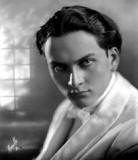 Manley Hall- The Lost Keys of
Freemasonry is a work often quoted by anti-Masons due to some of the
statements made by Hall about the religious nature of Freemasonry. Published in 1923, it was written when
Hall was barely 21 years of age - and some thirty one (31) years before he became a Mason! Because of this, it can
easily be seen that the book represents merely the personal theories of a non-Mason. Further, Mr.
Hall (who passed away in August 1990) was a self-avowed mystic and hardly a "leading
authority" of Freemasonry.
Manley Hall- The Lost Keys of
Freemasonry is a work often quoted by anti-Masons due to some of the
statements made by Hall about the religious nature of Freemasonry. Published in 1923, it was written when
Hall was barely 21 years of age - and some thirty one (31) years before he became a Mason! Because of this, it can
easily be seen that the book represents merely the personal theories of a non-Mason. Further, Mr.
Hall (who passed away in August 1990) was a self-avowed mystic and hardly a "leading
authority" of Freemasonry.
Anti-Masons make much over Hall's writing being highly 'influential' on Masonry. The publishers of the 1976 reprint of his book (53 years after its original publication!) note (somewhat proudly) that Hall's work had sold over 30,000 copies. By contrast, however, the anti-Masonic book by World War I German General Erich Ludendorff sold over 100,000 copies.
| "He was a promulgator of mystic and theosophical
philosophies and despite the claims of anti-Masons, his writings have not received
official sanction by any Masonic body. The fact that he held the Thirty-third Degree and
was respected by many Thirty-Third Degree Masons and even by the Supreme Councils 33º is
no more significant than the fact that various Baptist, Anglican, or Methodist authors
also hold or held that honor." "Is
It True What They Say About Freemasonry" |
Additionally, as a founder of 'The Philosophical Research Society', Hall becomes the brunt of criticism from the religious intolerants who despise all forms of free thought and somehow manage to tie theosophy and Freemasonry together through this one individual. We'd suggest that whenever one sees a condemnation of Freemasonry based on quotes from either Hall or Pike, they should look quite suspiciously.
Kenneth Mackenzie - author of the Royal Masonic Cyclopaedia is sometimes quoted by anti-Masons as being a 'definitive' work of reference for Freemasonry written by a Mason. The truth, however is that after his initiation (19 January 1870), the Craft held no further interest for Mackenzie and he left within 12 months (1871). His book was written in 1877 when he was not a Mason and his short involvement with Freemasonry hardly qualifies him to be considered a "source" from which legitimate conclusions can be drawn. While active Masonic membership is not a prerequisite to knowledge, one can reasonably conclude that without it (particularly when it is abandoned and/or rejected) the author's conclusions might well be tainted. Could YOU write an encyclopedia about an organization to which you had belonged for less than a year?
Joseph Fort Newton, Litt.D. - An ordained minister who served churches in Texas, Missouri, Illinois, Iowa, London (England), New York and Philadelphia and who was the revered Grand Chaplain of the Grand Lodge of Iowa wrote a book in 1914 ("The Builders") with the financial encouragement of that Grand Lodge. Anti-Masons are quick to point out that this book was "approved" by Freemasonry yet they fail to note that such approval was only from the Grand Lodge of Iowa which commissioned it - and not by any other Grand Lodge. Significant too is the fact that only one quote ever seems to appear from Dr. Newton's inspiring work.
Newton writes "Beginning as far back as 1886, Waite
issued his study of the Mysteries of Magic, a digest of the writings of Eliphas
Levi, to whom Albert Pike was more indebted than he let us know." What can
we make of this claim? Levi was a prime creator in the ongoing myth of Baphomet
so by this allusion, anti-Masons would have you believe that (a) Albert Pike
somehow supported Levi's ideas, (b) Pike kept this a secret from all but
(apparently) Newton and - by extension - that (c) Freemasonry supports worship
of the devil! Does such a contrived link have even a marginal connection with
reality? We don't think so.... In fact, Pike DID 'copy' (almost and in some
cases exactly word for word) what Levi had written but certainly not his more
far-fetched ideas.
Perhaps those who wish to quote Dr. Newton might benefit from reading some of
his other words in the very same book. He writes:
"Apart from its rites, there is no mystery in Masonry, save the mystery of all great and simple things. So far from being hidden or occult, its glory lies in its openness, and its emphasis upon the realities which are to the human world what light and are are to nature. Its mystery is of so great a kind that it is easily overlooked; its secret almost too simple to be found out. "We know as much as we do." said Francis of Assisi. It is not enough to enact a truth in ritual; it must become both an incarnation and an act."
The Builders - A Story and Study of Freemasonry
by Joseph Fort Newton, Litt.D.P. Revised and Enlarged 1951 edition, p.63
Lynn Perkins - As far as we know, Perkins wrote only one book: "The Meaning of Masonry - A Popular Guide to the Values of Ancient and Modern Freemasonry". Unless this work were of over-arching value rather than something which eluded copyright protection and was eligible for republication by anyone, thus becoming filler for the 'remainder' bins of bookstores throughout the 1960s and beyond, Perkins can hardly be named as 'an influential Masonic author' as some anti-Masons will do. Further, Perkins does not provide his Masonic curriculum vitæ so a current reader picking up a copy of his work has no basis on which to judge his Masonic knowledge. Upon inquiry, one finds that his bibliography is woefully inadequate for a discourse on such a profound subject. The author, though, makes it quite clear at the outset that his conclusions are his own and likely of little interest to anyone else. This, however, does not stop anti-Masons from using this book to support their contentions that somehow Masonry is a religion based on Perkins' writing. On our book reviews page, we have more to say about this work. We hope you'll drop by there.
Masonic Publishing Houses
One of the most hilarious claims we see from time to time is that Masons have their own 'publishing houses' where secret books are printed only for Masons. Let's examine that claim, shall we?
Here's a quote from one of our favorite hysterics, 'Director' David Bay of his self-created Cutting Edge Ministries (which contends that the US government is controlling our weather and which really seems to be far more about selling stuff than anything else):
| "For so very many years, Freemasonry has been one of the most secret of the secret societies. While it had its own publishing press, its books were never sold to anyone who was not a Freemason. Freemasonry held its teachings very secret within its members, and each member took oaths whereby he swore to never, ever divulge the teachings which he was about to receive." |
We've addressed the issue of secrecy elsewhere on this site and will not do that on this page. Bay contends in the second sentence, however, that Freemasonry had its own publishing press. Where? When? Who ran it? Was this a secret too? Would the 'Director' care to provide some evidence of this claim?
In many of his other rants, Mr. Bay mentions Macoy Masonic Publishing and Supply Company frequently. Is this the supposedly secret publishing house about which Mr. Bay writes? We'll wait with bated breath for the answer to this.
The 'Director' has also erroneously condemned Kessinger Publishing and we've addressed that on our page about him here. But Bay is not the only one to make such claims: 'St. John the Sublime Reformer' and others do this.
Where, we ask, is their proof? At what point are/were Masons told where to send their money for these secret books? Is there some order form somewhere that Masons were given? How is it that their spouses never knew about this when books would mysteriously appear? Did these books have to be hidden under the bed? What happened to them when the Mason died? Did they just disappear or did the Masonic book recovery squad raid the home while the family was off attending the funeral service?
We advise that readers examine such claims to see whether the puerile rhetoric and acrid hyperbole makes a bit of sense in light of reality.
Some other author you want us to cover? Just give a shout! See the directions below....
Updated 6 September 2009 with some small additions in January, 2014.
|
Related Topics: |
|
In addition, |







 Just
click on "Prince, the Search Dog" to find things on our site. He's on every page
and he'll take you directly to our search form where you can see if we've
written about whatever it is you're interested in. Prince has a great memory; he
always remembers where things are!
Just
click on "Prince, the Search Dog" to find things on our site. He's on every page
and he'll take you directly to our search form where you can see if we've
written about whatever it is you're interested in. Prince has a great memory; he
always remembers where things are!